


Interpretation of the Seed
A tree starts as a seed. Already we see that trees are symbols of symbolism itself. A symbol is the union of logoi and flux, and a tree is itself a metaphor for the hierarchy (or tree) of the logoi. That it begins as a seed is symbolic of how everything which exists has a logos, and that logos contains the code which will flourish into the whole being.
The inside of the seed lives and the outside dies, and the inside consumes the outside for nutrients — this is the immortality of the soul and the death of the body. That the inside of the seed consumes the outside for nutrients is asceticism — the mortification of the body is the life of the soul.
This seed, having completed a life of asceticism, enters a new world with a new glorified body — that is: the seed leaves the ground, symbolizing our present world, and emerges into the open air, symbolizing the Kingdom. This new body is clearly glorified because it points upward, symbolically where heaven is.
Interpretation of the Branches
The tree then spreads out its arms in imitation of the Crucified One. And through this imitation, leaves are generated. These leaves symbolize the faithful, as Christ Himself told us:
I am the vine; you are the branches. (John 15:5)
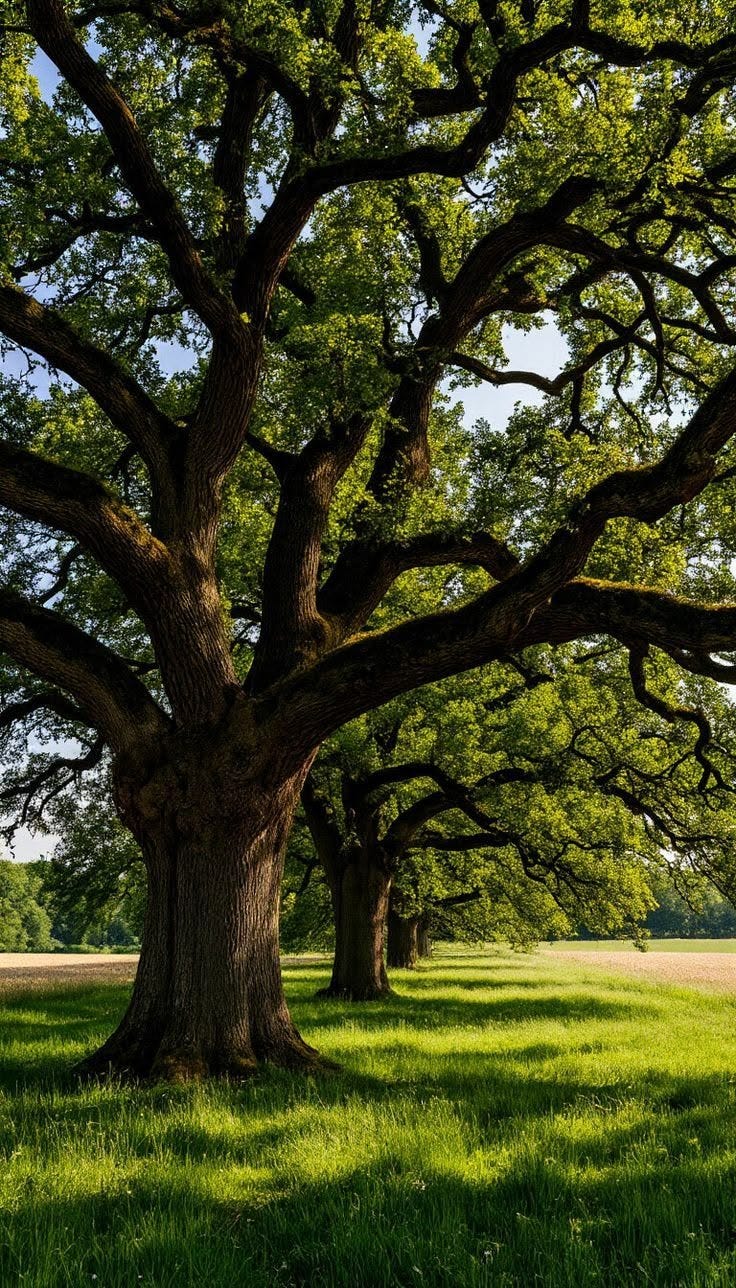
The leaves are truly part of the tree, yet are also truly unique concepts apart from the tree. When we speak of “the tree” we also implicitly speak of the leaves, and yet we can also speak of leaves while not speaking of trees. In this is revealed the mystery of the Eucharist — in partaking of the Eucharist, we become members of Christ:
For we are members of His body, of His flesh, and of His bones. (Ephesians 5:30)
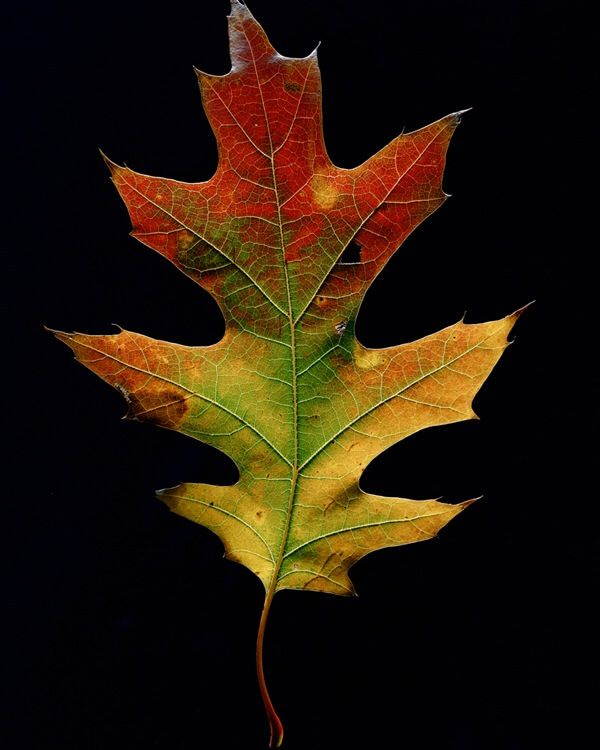
In each leaf there are “veins.” These veins form the pattern of a mini-tree. In this is revealed the mystery of the image of God in man. Saint Gregory of Nyssa says:
The creation of man is related as coming last, as of one who took up into himself every single form of life, both that of plants and that which is seen in brutes. His nourishment and growth he derives from vegetable life; for even in vegetables such processes are to be seen, when aliment is being drawn in by their roots and given off in fruit and leaves. His sentient organization he derives from the brute creation.1
So the image of God in man is an image of the Logos. This is why you might read the Fathers correlating the image of God in man with the “rational soul.” This does not mean, as many modern misinterpeters have misunderstood, that the image of God is correlated with man’s rationality in the modern sense (else we’d have eugenics). For example, in On the Incarnation, Athanasius says,
He made them according to His own image, giving them a share in the power of His own Word, so that, having as it were a shadow of the Word, and being rational, they might remain in blessedness.2
The word here translated as “rational” is λογικοί (logikoi). You obviously immediately see the connection to “logos.” Saint Athanasius here means “rational” in the same way I occasionally use the word “logickally” as opposed to “logically.” The former means “having to do with logoi” and the latter means “having to do with reasoning.” Athanasius and the other Fathers are really saying that the fact our soul is uniquely a microcosm is the unique image of God in we humans. Hence also, as I’ve said ad nauseum in these Katalogisis articles, St. Isaac could say
He who knows himself knows all things, and he who knows all things knows God.3
So the image of God cannot be, as the Protestants try to make it, a single thing which we possess. When we try to make it that we end up excluding people groups: be it mentally diminished people, sociopaths, etc. The image of God is indeed unique to mankind, but it is not a single thing which we possess that the rest of creation does not. In fact, it is the inverse: it is that we possess everything in creation which every other instance of creation lacks. The image of God in mankind is not a property we possess which something else does not, it is actually that we possess all properties. God is a macrocosm and so man is a microcosm.
This is the message of the veins of a leaf.
That the tree, though a symbolic glorified body, has its roots in the dirt, symbolizing this present world, is a symbol of how the identity of the righteous and damned in the Eschaton will be based on their actions in this world. The root of the Eschaton is this world. This world is the seed of the Eschaton, and in order for the immortal substance of this world— souls, namely— to flower into life, this world must first pass away. Then indeed, the leaves which have fallen off the tree will return.
What about the trees whose leaves do not leave and return, but remain year round? I ask: what are these leaves like? They are brittle and thin — they are hard and narrow. Thus the leaves of the evergreen tree show us that the way is perpetually hard and narrow.
On the Making of Man, 8.7
On the Incarnation 3.3
Ascetical Homilies, 34