


Interpretation of Pollen
Saint Justin Martyr calls Christ the “Logos Spermatikos.” Pollen is plant seed, and like tree seeds, it is symbolic of symbolism itself. The tree is planted, but pollen spreads and flies around.
The wind blows where it wishes, and you hear its sound, but you do not know where it comes from or where it goes. So it is with everyone who is born of the Spirit. (John 3:8)
The Spirit, as discussed in previous articles1, is the Life-giver of the cosmos, particularly actualizing logoi in creation. As we have learned from St. Maximos,
The one Logos is many logoi and the many logoi are One.2
That pollen comes from the Vine, from the Branches, and plants new life elsewhere is a symbol of the hierarchy of logoi Itself and of our being “lights on a hill.”
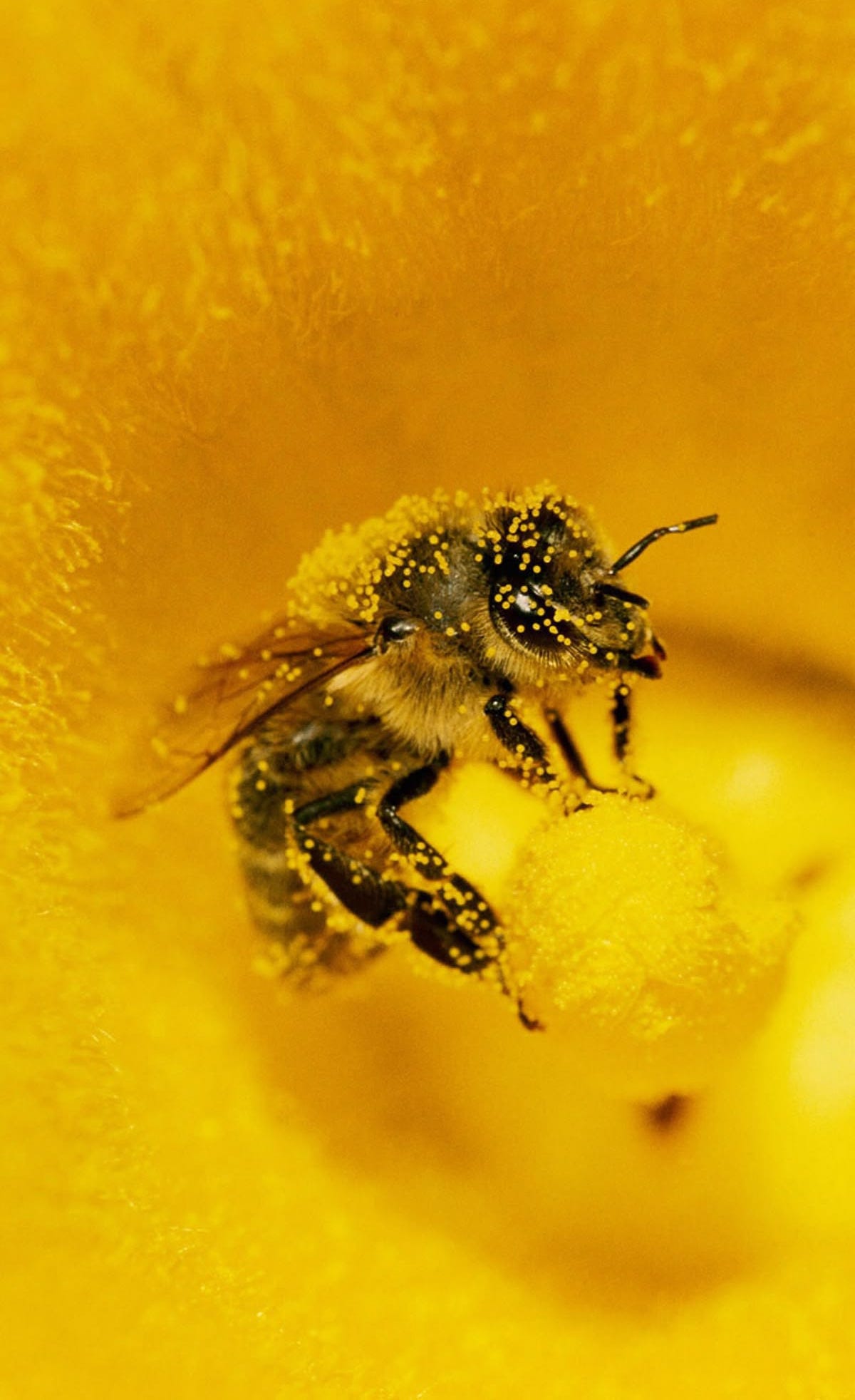
Interpretation of Bees
Bees are the chrismated — and this is why they are yellow. In imbibing the pollen— that is, the logoi— they have become participants in it themselves. They are partakers of the divine life. Bees are christs. And what is the meaning of “christ?” It means “anointed one.”
The bees take pollen and mingle it with their saliva to create honey — nutrients — life. This is Christ. Hence St. Barnabas teaches:
Attend, my children, to what he says: “a land flowing with milk and honey.” The infant is first nourished with honey, and then with milk. So also we, being nourished… by the Word, shall live and have dominion over the earth.3
This is also why the ruler of the bees is a Queen. The Queen bee overseas the production of honey, which is Christ. She gives birth to the worker bees, whose only purpose in life is to cultivate this honey — and this too is our only purpose. This Queen bee is our Lady, the Theotokos.
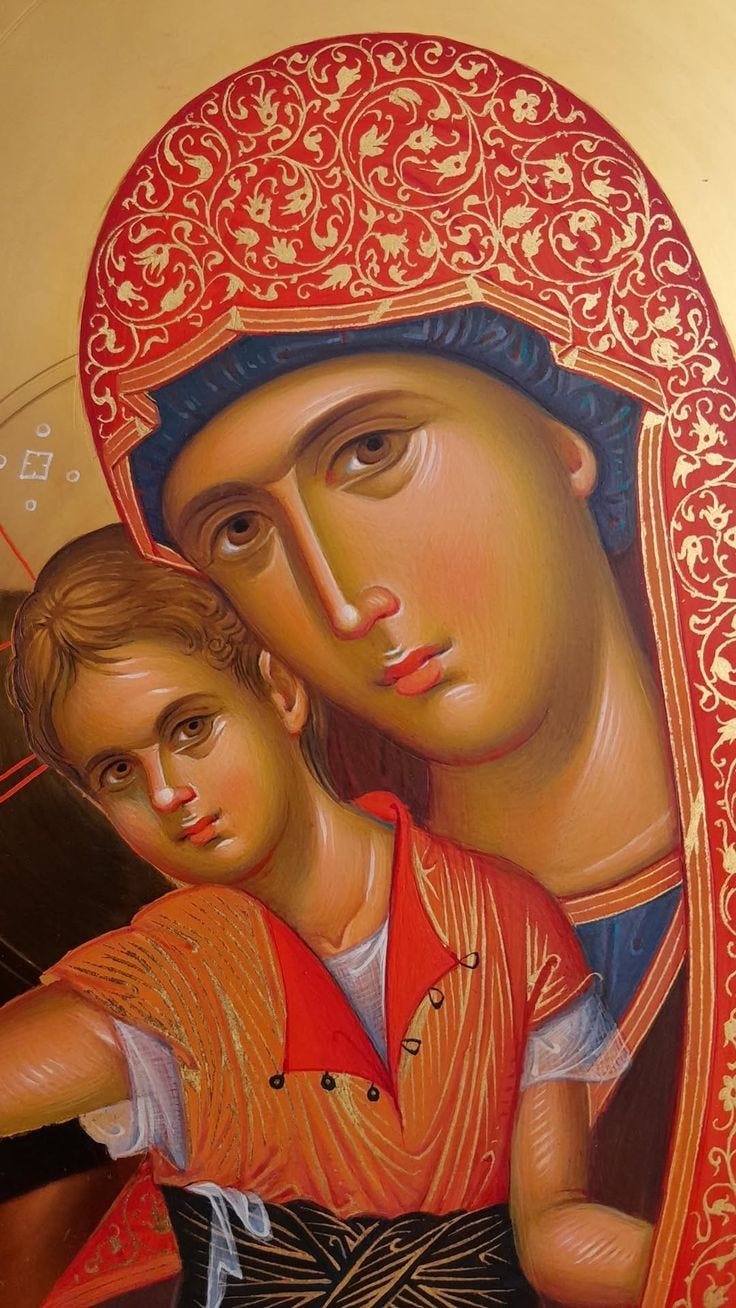
Saint John Chrysostom says:
Let us imitate the bee, and not the fly. The bee sits upon the flowers and gathers from them what is useful, and so makes honey. The fly, on the other hand, passes over the sound places and settles upon wounds and corruption.
So also do you: pass by what is evil, and gather only what is profitable. For if you are careful, you will be able even from small things to reap great benefit. The bee does not gather everything from the flowers, but only what is suitable for it; and from this it prepares its honey.
In the same way, let us also go through the meadows of the divine Scriptures, gathering what is useful, and laying it up in the storehouse of our mind, that we may have a continual supply of spiritual sweetness.4
For this reason bees rested on the lips of the Philosopher Plato and St. Ambrose when they were youths — the bees search for life, and in the words of these men, they found it.
Katalogisis pt. 5, pt. 6, and On the Sexes.
Ambiguum 7.
Epistle of Barnabas 6:17-18.
Homily 12 on Genesis.